

Uncategorized
The Story of Diamond Painting: Origins & the Global Craft
The Story of Diamond Painting: Origins & the Global Craft
Diamond painting feels timeless — that quiet, glittering rhythm of placing one tiny facet after another. But the history of diamond painting is surprisingly short. Here’s where the craft came from, how it swept the world in barely a decade, and why it became one of the most-loved ways to unwind.
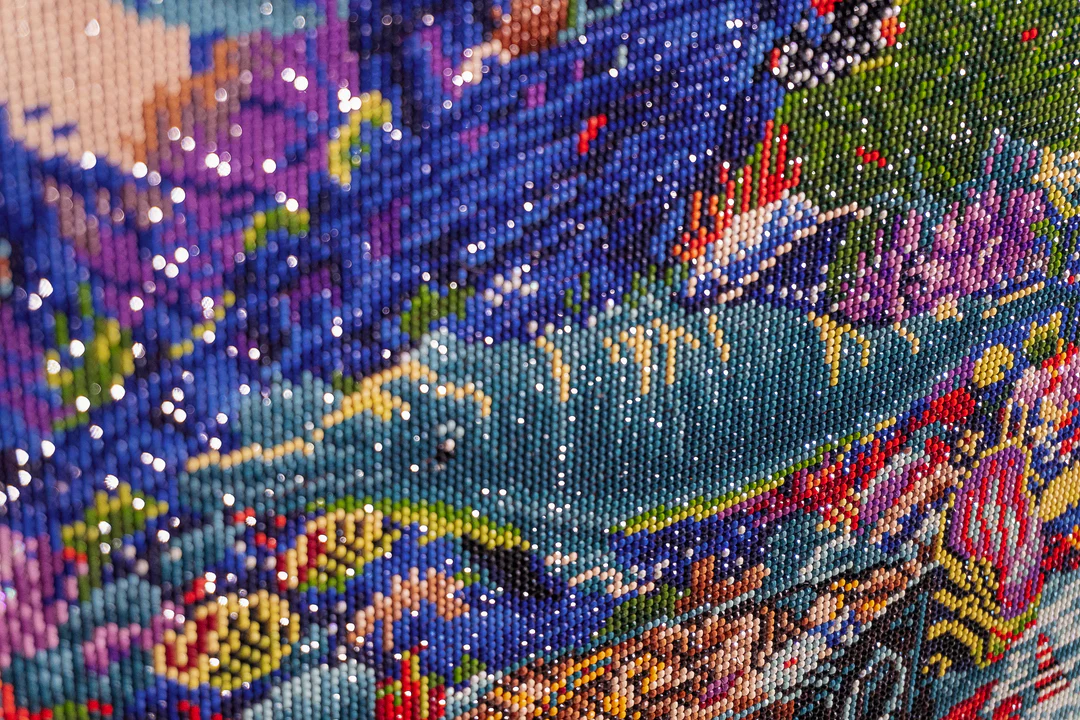
Here’s the thing most people get wrong about the history of diamond painting: they assume it’s ancient. It looks like it should be — the mosaic sparkle, the tile-by-tile patience, the finished piece that glitters like something from a museum floor. But the boxed kit you can buy today is a child of the smartphone era, not the Renaissance. Its roots run deep; the craft itself is young.
A craft born from two older arts
Diamond painting sits at the meeting point of two much older traditions. The first is mosaic art, which dates back thousands of years to the Greeks and Romans who set tiny coloured tiles — tesserae — into sweeping floors and walls that still shimmer in situ today. The second is cross-stitch, the symbol-and-grid needlework that taught generations to “follow the chart.” Diamond painting borrows the mosaic’s tile-by-tile beauty and the cross-stitch’s approachable, colour-coded method — then swaps thread and grout for sparkling resin “drills” on a pre-glued canvas.
You can see the family resemblance the moment you sit down with a kit. The grid of coded symbols is pure cross-stitch. The way hundreds of small units resolve into one image as you step back is pure mosaic. What’s new is the shortcut: no needle, no drawing, no grout that has to set overnight. The adhesive does the holding, and the sparkle is built into the drill itself.
The modern kit emerges
The version we recognise today took shape in the early 2010s, and it came together in a specific order. First, factories learned to mould faceted resin drills cheaply and consistently — the same rhinestone-style beads used in nail art and decoration. Then someone paired those drills with a printed adhesive canvas, a symbol chart, a wax-tipped applicator pen and a small tray, and boxed the whole thing as a self-contained kit. Suddenly a craft that once needed loose supplies and know-how became a beginner-friendly hobby anyone could pick up straight out of the packaging.
Manufacturing scale mattered more than any single inventor. As drills became reliable and affordable, prices dropped, designs multiplied, and what had been a niche craft supply turned into a mainstream leisure product. By the mid-2010s the kits were everywhere online, and the vocabulary — “5D,” “full drill,” “round vs square” — was settling into the shared language makers still use today. If those terms are new to you, our complete beginner’s guide to diamond painting breaks every one of them down.
You don’t need to draw, paint, or stitch. If you can match a symbol to a colour, you can make something beautiful.
Why it spread so fast
Three things turned diamond painting from a curiosity into a global pastime. First, the instant gratification: every drill you place adds visible sparkle, so progress feels rewarding from the very first minute — there’s no long, discouraging “ugly stage” the way there is with a half-finished painting. Second, the calm: it’s repetitive in the best way — a screen-free, meditative activity that quiets a busy mind (more on that in our guide to diamond painting for stress relief). Third, community: online groups, unboxing videos and finished-piece galleries gave makers a place to share progress, swap tips and show off, which pulled in newcomers by the thousands.
The timing was almost perfect. The craft matured right as social feeds rewarded satisfying, watch-it-fill-in content, and a well-lit clip of drills clicking into place is exactly that. A hobby that might have taken decades to spread by word of mouth found its audience in a couple of years.
From hobby to heartfelt gift
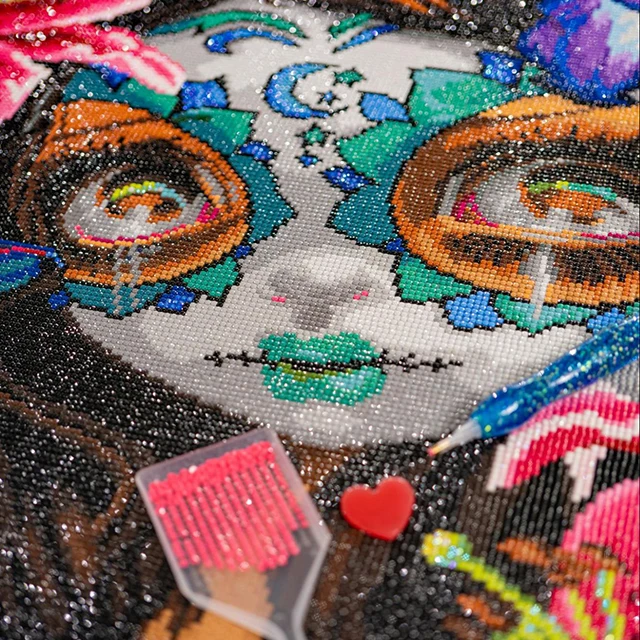
As the craft matured, makers wanted more than catalogue designs — they wanted their images. That demand gave rise to custom diamond painting, where a personal photo — a pet, a portrait, a wedding day — is converted into a symbol-mapped canvas. It’s the same leap cross-stitch and paint-by-numbers made a generation earlier, just faster. Custom pieces turned diamond painting into one of the most meaningful handmade gifts you can give: a keepsake the recipient physically helps bring to life, or receives finished and framed. It’s a big part of why the craft stuck rather than fading as a passing trend.
Where it stands today
Today diamond painting is a worldwide craft enjoyed across generations, from first-timers filling a small canvas in a weekend to devoted makers working on large statement pieces for weeks. The tools have refined — brighter, more colour-true drills; smoother canvases; better trays and pens — but the heart of it hasn’t changed. It’s still the simple, glittering pleasure of watching a picture appear beneath your hands. What has grown is choice: sizes from compact 30×40cm kits up to 50×60cm statement pieces, square and round drills, curated collections instead of the endless me-too grids that flooded the early market.
At Art Diamond Paintings, we treat that heritage with respect. We curate our designs like a gallery — chosen, not dumped — and cut our full-drill kits with colour-true, faceted 5D drills that genuinely catch the light. Every kit is backed by lifetime replacement drills (run short and we resend them free, for life) and a 30-day guarantee, and we ship honestly rather than promising the impossible — the real delivery details are here. That’s the short version of the history of diamond painting: an old idea, a modern kit, and a craft that turned out to be exactly what a lot of busy people needed. If the story’s got you curious, the best way to understand it is to make one.
Keep reading: What is diamond painting? The complete guide · Diamond painting for stress relief · Tips & tricks for a flawless finish · How to diamond paint (beginner’s guide)
